How often should Williamsburg lawns have their irrigation systems winterized and spring-started?

It is easy to forget about your lawn's vital underground systems until something goes wrong, yet the performance and longevity of your irrigation setup depend almost entirely on two crucial annual appointments. For homeowners in the historic and beautiful community of Williamsburg, neglecting these tasks can turn a simple fix into a costly, devastating repair when the unpredictable Virginia weather strikes. Understanding the precise timing for preparing your system for winter and then reviving it for the spring growing season is paramount to maintaining a lush, healthy landscape year after year. These seasonal transitions require expert knowledge of local climate patterns and system mechanics to ensure that every pipe, valve, and sprinkler head is protected from the elements. This essential care is why so many residents rely on a trusted Irrigation Company in Williamsburg, VA to manage the technical aspects of their property’s hydration needs.
We are often asked about the absolute earliest and latest dates for these services, and the truth is that while there is a reliable window, the annual timing is guided more by specific weather conditions than by a fixed calendar date. Virginia's coastal location means that the transition between seasons can be sudden and dramatic, requiring property owners to be vigilant and proactive in scheduling their maintenance. Preparing your system correctly prevents the expense and frustration of discovering burst lines and cracked components when the warmer weather finally returns. We want to ensure your investment is secure and ready to deliver optimal performance the moment your lawn needs it most.
What is the Critical Window for Seasonal Shut-Down Irrigation and Why Can’t I Just Wait Until Snowfall?
The concept of winterization often conjures images of snow and ice, but the need for a seasonal system shutdown arrives much earlier than many homeowners realize. This preparation is not about dealing with the visible winter landscape; it is entirely focused on combating the risk of frost damage below the surface of the ground. When water is allowed to remain within the plumbing of an irrigation system, even in small residual amounts, it becomes a ticking time bomb waiting for the first sustained temperature drop.
The process of shutting down your system is a technical procedure designed to eliminate all water from the underground pipes and above-ground components. It involves carefully balancing the risk of late-season watering needs against the potential for catastrophic freeze damage. The goal is always to protect the entire network from the expansive force created when water turns to ice.
The Immediate Danger Posed by Freezing Temperatures
When water freezes, it expands by approximately nine percent of its volume, a force that no standard irrigation pipe or component can withstand. This expansion inside pipes, particularly in vulnerable areas like fittings, elbows, and manifolds, can cause immediate and significant cracking. Unfortunately, this damage remains hidden until the spring startup, turning a simple system activation into a stressful discovery of multiple leaks.
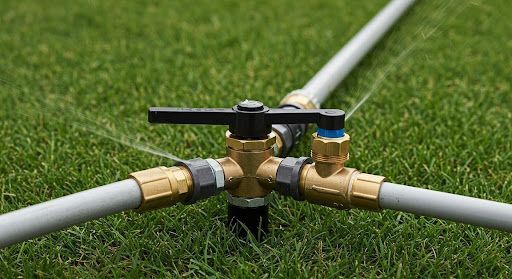
Furthermore, above-ground components are especially susceptible to this kind of damage. The backflow prevention device, which is essential for protecting your potable water supply, and the exposed sprinkler heads are highly vulnerable to freezing. These delicate assemblies often contain small moving parts, gaskets, and seals that can be easily compromised by even a brief hard freeze.
Understanding the Key Role of the Blow-Out Process
The most critical step in proper winterization is the “blow-out” procedure, which uses an industrial-grade air compressor to physically push all residual water out of the mainlines, lateral lines, and sprinkler heads. This is not a simple DIY task; it requires a specific volume and pressure of compressed air that is far beyond the capacity of typical home air compressors. Using insufficient pressure will leave behind pockets of water, defeating the purpose of the whole procedure.
Conversely, using too much pressure, or applying it incorrectly, can instantly damage or break delicate internal components like seals, diaphragms, and rotor gears within the sprinkler heads and control valves. Professional technicians are trained to introduce the air slowly and regulate the pressure meticulously for each distinct zone of your system. This careful application ensures maximum water removal without subjecting the system to undue stress.
Protecting Essential Components: Valves, Solenoids, and Controllers
Winterization goes beyond just blowing out the lines; it involves securing all the moving parts that control water flow. Each zone is governed by a control valve, which contains a rubber diaphragm and a solenoid, the electronic switch that activates the valve. If water freezes within the valve body, it can shatter the housing or tear the diaphragm.
During a comprehensive shutdown, professionals ensure these valves are manually drained and the controller is properly set to the "off" or "rain-delay" position. The electrical components, while less prone to freeze damage than the plumbing, should also be deactivated to protect them from potential power surges or electrical issues that might occur during severe winter storms.
It is precisely this level of detail and mechanical expertise that separates adequate service from true protection. Entrusting your system to a skilled Irrigation Company in Williamsburg, VA ensures that every tiny fitting and exposed component is fully accounted for and secured against the devastating effects of the mid-Atlantic winter.
What are the Official Frost Risk Irrigation Winterization Dates for the Hampton Roads Area?
Determining the right time to shut down your system is less about a single date and more about observing climate indicators specific to the Williamsburg and greater Hampton Roads region. This area falls primarily within USDA Hardiness Zone 7b/8a, which provides critical clues regarding the potential severity and timing of the first fall freeze. We must prioritize protection before the possibility of a "hard freeze" arises.
Pinpointing the Danger: USDA Hardiness Zones
Williamsburg's climate places it right on the northern edge of the temperate coastal zone, meaning it experiences distinctly cold winters, making seasonal system protection absolutely mandatory. Based on historical data for this part of the Mid-Atlantic, the average first frost date often falls in late October or early November.
The real danger, however, is not the first light frost, which is generally harmless to underground systems, but the frost risk irrigation winterization period when a hard freeze is possible. A hard freeze is defined as temperatures dropping to 28°F (-2°C) or below for several hours, which is cold enough to freeze water in exposed pipes and often in the shallow lateral lines near the surface.
Analyzing Average First Frost Dates
While light frost might occur as early as mid-October, we generally recommend aiming to complete winterization services before the third week of November. This schedule provides a critical buffer, safeguarding your system against the unpredictable deep-freeze events that can occur suddenly in late autumn or early winter. Waiting until the absolute last minute is highly risky.
We encourage homeowners to schedule services between October 15th and November 30th. This window allows us to manage all customer appointments before the weather turns reliably cold, ensuring nobody is caught off guard. Booking early guarantees your system is protected.
Why We Target Consistent Nighttime Temperatures
The timing of the shutdown is determined by tracking the overnight low temperatures. Once the nighttime mercury consistently drops into the low 30s or below for more than three consecutive nights, the deeper ground temperatures begin to drop quickly. This is the signal that exposed water lines and above-ground components, like your Backflow Preventer, are in imminent danger.
We, at Hampton Roads Irrigation & Landscape, prioritize monitoring the local forecast for our service area. This proactive approach allows us to advise our clients precisely when to move forward with the seasonal shut-down, ensuring maximum protection while still allowing for late-season watering if necessary. Our expertise in local climate cycles is invaluable for determining the safest time to proceed.
Preparing for the Warmth: When is the Ideal Spring Startup Williamsburg Timeframe?
The spring start-up process is just as critical as winterization, serving not only to reactivate the system but also as a crucial, annual inspection that identifies any winter damage or wear and tear. Scheduling the start-up correctly balances the need to give your lawn water early in the growing season with the necessity of avoiding any residual frost risk irrigation winterization periods.
The ideal timeframe for spring startup Williamsburg properties is generally late March through mid-April, or safely after the average last freeze date. This window ensures that the threat of a damaging late-season frost has fully passed. The last thing any homeowner wants is to activate the system, only to have a surprise late-season cold snap cause immediate freeze damage to the newly pressurized lines and components.
The Role of the Last Spring Freeze Date
Historically, the last hard freeze for the Williamsburg area usually occurs around the end of March or the very beginning of April. Therefore, scheduling the spring start-up in mid-April provides the safest buffer against unexpected dips in temperature. Activating the system too early poses the exact same risk as failing to winterize in the fall.
The spring start-up is fundamentally different from simply turning on a faucet; it involves a meticulous process to prevent water hammer and identify any issues caused by the winter dormancy. Water hammer is a pressure surge that occurs when water flow is suddenly stopped or started, which can be immensely damaging to system pipes if the main valve is opened too quickly.
The Multi-Point Inspection of the Spring Start-Up Process
The start-up is a comprehensive diagnostic service. The technician will slowly pressurize the system to check for visible leaks in the backflow preventer and main lines. Next, they methodically run each zone to ensure every sprinkler head is popping up correctly and rotating as designed.
Key issues often uncovered during this inspection include:
- Damaged Sprinkler Heads: Heads cracked by lawn mowers, snow removal equipment, or minor winter settling.
- Minor Leaks: Small leaks in fittings or connections that may have been stressed by cold temperatures.
- Controller Issues: The main controller needing battery replacement, clock resetting, or reprogramming for the new season's watering requirements.
Identifying and fixing these issues early prevents water waste, ensures uniform turf coverage, and optimizes your system’s efficiency throughout the hot summer months. Understanding the full scope of system maintenance and annual costs is important for budgeting. We provide a thorough service report after every start-up so you know exactly what condition your system is in, giving you the information you need to factor repairs into your annual budgeting. Our goal is to ensure you are fully informed, especially regarding costs. Understanding your Williamsburg Homeowners’ Guide to Irrigation Costs is essential for long-term planning and maintaining your investment.
Deeper Dive into the System: The Importance of Components and Efficiency
A robust irrigation system is a complex network of carefully calibrated components, each playing a vital role in delivering water efficiently. The annual start-up and shutdown services are the ideal times to focus attention on these critical parts, ensuring they are not just functional, but operating at peak efficiency. Understanding the purpose of each component, from the backflow device to the individual nozzles, empowers homeowners to manage their landscape more effectively.
Backflow Prevention and Annual Testing
The backflow prevention device (BFP), typically a Pressure Vacuum Breaker (PVB) or a Reduced Pressure Principle Assembly (RPA), is one of the most important components for the safety of your home and community. Its sole purpose is to prevent contaminated water from the irrigation lines from siphoning back into the main public drinking water supply.
Due to the critical nature of this function, Virginia state regulations typically require BFPs to be tested annually by a certified technician. This test ensures the internal check valves and air vents are operating correctly, providing a reliable barrier against cross-contamination. This is why we dedicate a significant portion of our expertise to handling this vital maintenance task. You can read a complete breakdown of compliance and maintenance details by reviewing our dedicated guide on Backflow Prevention for Irrigation Systems.
Controllers, Solenoids, and Smart Irrigation
The controller is the brain of the irrigation system, responsible for scheduling and timing all watering events. Modern controllers, often Wi-Fi enabled, are capable of integrating with local weather data, rain sensors, and soil moisture probes to provide precise, water-saving operation. The solenoid is the electronic component on each valve that receives the signal from the controller, telling the valve when to open and close.
During the start-up, we meticulously check the controller programming, replace any necessary backup batteries, and verify that the solenoids in the valve boxes are correctly initiating water flow for each zone. Utilizing these technologies ensures that your lawn receives water precisely when and where it is needed, maximizing water conservation. This level of optimization is crucial for sustainable lawn care, and we encourage all homeowners to explore the benefits. For a comprehensive look at maximizing resource use, please check out our resource on Efficient Lawn Care with Smart Irrigation in Williamsburg.
Common Pitfalls and Why Professional Service Prevails
While the seasonal cycle of turning water off and on seems simple on the surface, the process is fraught with technical risks that can lead to expensive system failure. The cost of professional service is consistently far lower than the cost of repairing catastrophic damage caused by improper techniques. Homeowners who attempt these critical services themselves often face unforeseen consequences.
The Dangers of DIY Blow-Outs
The most frequent and destructive DIY mistake during winterization involves the use of compressed air. Homeowners often rent or purchase compressors that do not deliver the necessary sustained volume or are incorrectly rated, resulting in an insufficient blow-out that leaves water sitting in low spots of the piping. The next morning, that residual water can freeze, cracking the pipe, which then goes undetected until the following spring.
The second major risk is applying too much air pressure too quickly. Standard irrigation lines and components are designed to handle water pressure, typically 40-60 PSI. They are not designed to withstand high volumes of air pressure introduced without proper regulation. The resulting shockwave, known as water hammer, can instantly detach fittings or rupture valve diaphragms, leading to expensive component replacement. Certified technicians possess the specialized equipment and knowledge to safely perform this procedure.
Overlooked Issues During Spring Start-Up
Many DIY spring start-ups consist of simply opening the main valve and setting the timer. This often results in critical system issues going completely unnoticed. For example, a cracked sprinkler head that is only leaking a small amount of water might go ignored, but over a summer, that single crack can lead to thousands of gallons of wasted water and a significant spike in utility bills.
Professional technicians are trained to identify subtle signs of trouble, such as slight pressure drops, uneven spray patterns caused by clogged nozzles, or a zone that is running for too long due to a sticky valve. These small issues, when neglected, lead to dry patches, drowned areas, and a perpetually unhealthy lawn. Addressing system performance mid-season is key to a perfect lawn. To help keep your system running optimally all summer long, we have put together a valuable guide on Williamsburg Guide to Mid-Season Irrigation Maintenance that covers these smaller, ongoing adjustments.
Choosing an Experienced Partner
When choosing an irrigation provider, experience and local knowledge are paramount. A company that understands the specific soil types, grass varieties, and seasonal climate shifts unique to Williamsburg can offer unparalleled service quality. Our team at Hampton Roads Irrigation & Landscape has spent years perfecting our methods to ensure peak system performance across all local neighborhoods.
Before trusting your valuable investment to anyone, it is wise to see what other local residents have experienced. We are proud of the reputation we have built in the area for reliable, meticulous service, and we invite you to view our reviews from your neighbors to see our commitment to quality. When we perform a service, we aim not just to fix a problem, but to optimize the entire system for water conservation and lawn health.
Beyond the Seasonal Swap: Year-Round System Health
While winterization and spring start-up are the bookends of system maintenance, they are part of a larger, year-round strategy for maintaining a vibrant landscape and conserving resources. Thinking proactively about your system’s performance during the summer months is just as important as protecting it during the winter.
Mid-Season Check-ups and Adjustments
The heat of the Virginia summer can take a significant toll on an irrigation system. High temperatures increase water evaporation, requiring adjustment to watering times, while lawn growth can obstruct sprinkler heads, leading to dry spots. A mid-season check-up, typically scheduled between June and August, is designed to counteract these summer challenges.
During this service, technicians focus on adjusting arc and trajectory settings to compensate for new plant growth, clearing debris from filters and nozzles, and performing necessary seasonal adjustments to the controller’s programming. These minor tweaks ensure the system adapts to the peak demands of the growing season, maintaining efficiency and preventing stress on your turfgrass.
Upgrading to High-Efficiency Nozzles and Sensors
One of the best ways to future-proof your system and conserve water is through component upgrades. Many older systems use traditional fixed-spray nozzles, which often create a mist that is highly susceptible to wind drift and evaporation. Replacing these with multi-stream rotating nozzles, such as those made by industry leaders like Hunter (e.g., MP Rotators) or Rain Bird, can dramatically increase water efficiency.
These high-efficiency nozzles distribute water more slowly and uniformly, allowing the soil to absorb moisture more effectively and reducing wasteful runoff. Furthermore, the installation or calibration of advanced weather and rain sensors ensures the system automatically shuts off when rain is present, saving water and preventing overwatering. Investing in these component upgrades offers a measurable return on investment through lower utility bills and a healthier lawn.
Frequently Asked Questions About Seasonal Irrigation
To help our clients feel fully informed and confident about their landscape maintenance schedule, we have compiled the answers to some of the most common questions we receive regarding the seasonal operation of their systems.
Can I winterize my sprinkler system myself?
While technically possible, we strongly advise against DIY winterization, primarily due to the high risk of catastrophic damage from compressed air. The professional procedure requires a high-volume, low-pressure air compressor, which is specialized equipment most homeowners do not have. Incorrectly introducing air can instantly destroy your backflow preventer or shatter your main pipes, leading to repairs that far exceed the cost of professional service.
When exactly should I stop watering in the fall in Williamsburg?
You should gradually reduce watering frequency as temperatures cool, but you should not completely stop until the winterization service is scheduled. The goal is to allow your lawn and landscape to slowly transition to dormancy. As soon as overnight temperatures consistently fall into the low 30s, and your winterization appointment is imminent, you can turn off the system manually to prepare for the professional blow-out service.
What is a "hard freeze" and why does it matter for irrigation?
A hard freeze occurs when the air temperature drops to 28°F (-2°C) or below for a prolonged period, typically four hours or more. This temperature is cold enough to penetrate the ground and freeze water inside the shallow irrigation lines and exposed components. The resulting expansion of the ice is the cause of burst pipes, which necessitates the crucial timing of the seasonal shut-down irrigation process well before this temperature threshold is reached.
What happens if I start my irrigation system too early in the spring?
Starting your system too early leaves it vulnerable to a late-season surprise frost. If you pressurize the lines and a hard freeze occurs afterward, the newly pressurized water will freeze, potentially cracking the backflow device and the main lines, forcing you to pay for expensive repairs and another service call. It is always safer to wait until the average last freeze date has passed, typically mid-April in the Williamsburg area.
Does a rain sensor protect my system from freezing?
No, a rain sensor is designed only to interrupt the watering cycle when it detects a certain amount of rainfall, thereby conserving water. It provides zero protection against freezing temperatures. Only a proper seasonal shut-down, performed by a professional Irrigation Company in Williamsburg, VA, can protect the pipes and components from freeze damage.
A Commitment to Year-Round Lawn Excellence
The health and beauty of your landscape are sustained by a complex, hidden infrastructure that requires dedicated, seasonal care. For property owners in the Williamsburg area, the yearly transition from watering to winterizing, and back again, is a non-negotiable part of responsible system ownership. By adhering to the critical windows for seasonal shut-down irrigation and spring activation, you protect your investment from the damaging effects of fluctuating coastal weather.
Don't leave the longevity of your Irrigation Company in Williamsburg, VA system to chance. Whether you need to schedule your annual winterization before the first cold snap hits, or you are ready to plan your spring startup, partnering with an experienced, local professional is the most reliable way to ensure year-round system integrity. We are ready to help you manage the mechanical details so you can simply enjoy a beautiful, green lawn. To secure your appointment or to learn more about our comprehensive maintenance plans, we encourage you to contact us directly at your earliest convenience. We look forward to being your trusted partner in landscape maintenance.